



When starting or analyzing a business, it’s important to understand the difference between a trading company and a manufacturing company. Both play a vital role in the supply chain, but they operate in very different ways. Knowing their differences helps entrepreneurs, investors, and customers make smarter decisions.
What is a Trading Company?
A trading company focuses on buying and selling goods. Instead of producing items themselves, they purchase finished products from manufacturers or suppliers and then sell them to wholesalers, retailers, or directly to consumers.
Key features of a trading company:
Example: An electronics trading company that buys mobile phones from a manufacturer and sells them in bulk to retailers.
What is a Manufacturing Company?
A manufacturing company is involved in the production of goods. It uses raw materials, labor, and machinery to create finished products, which are then sold directly or through distributors.
Key features of a manufacturing company:
Example: A car manufacturing company that builds vehicles from raw materials and then sells them through dealerships or trading firms.
Trading Company vs Manufacturing Company: Key Differences
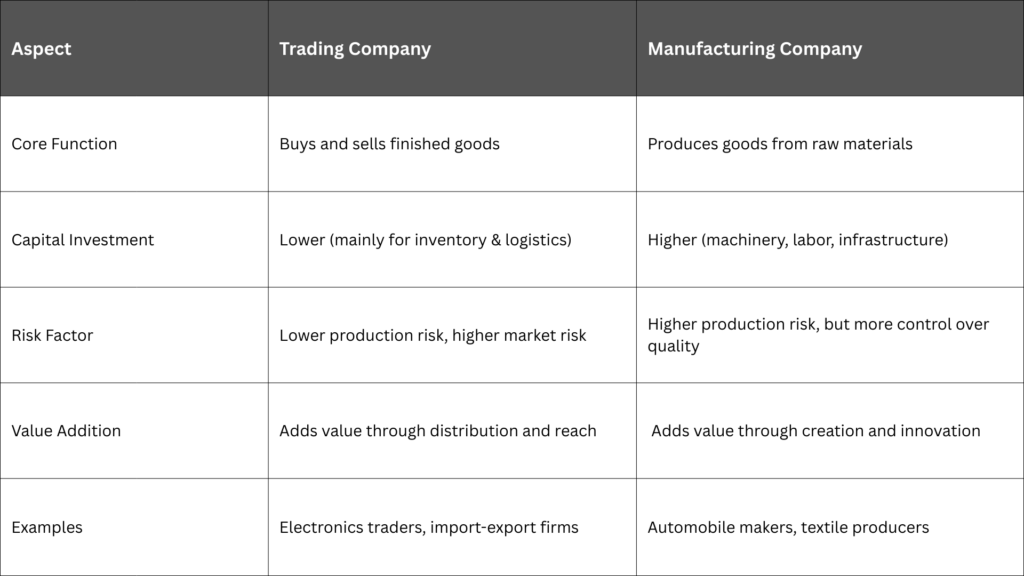
Trading and manufacturing businesses look similar from the outside, but they work in very different ways. Here’s what sets them apart.
Which is Better for Your Business?
The choice between starting a trading company or a manufacturing company depends on your budget, skills, and long-term goals. If you want lower investment and faster market entry, trading may be a better option. But if you prefer full control over production, branding, and product quality, manufacturing is the way to go.
FAQs
1. Which is more profitable: a trading company or a manufacturing company?
Profitability depends on the industry and market demand. Trading can offer quicker returns with less investment, while manufacturing often provides higher margins but requires bigger capital and long-term planning.
2. Can a company be both a manufacturer and a trader?
Yes. Many companies produce their own products and also trade in related goods. For example, a textile manufacturer may also import and sell fabrics they don’t produce themselves.
3. Which is easier to start: trading or manufacturing?
Generally, a trading company is easier to start because it requires less investment, infrastructure, and manpower. Manufacturing is more complex due to machinery, raw materials, compliance, and labor requirements.
4. Which has higher risks: trading or manufacturing?
Trading carries higher market risk (fluctuating demand, competition, supply chain issues), while manufacturing carries higher production risk (machinery failure, labor costs, raw material shortages).
Conclusion
Both trading companies and manufacturing companies are essential to the economy. Trading companies keep goods moving across markets, while manufacturers create the products we use every day. The right choice depends on your financial capacity, business vision, and long-term goals. Whether you choose to trade or manufacture, success comes down to smart planning, efficient operations, and understanding your market.